Table of contents
- What is Leaky Gut?
- Leaky Gut Symptoms: How to Recognise a Permeable Intestinal Wall
- Causes of Leaky Gut: Why the Intestinal Barrier Becomes Permeable
- Leaky Gut Diagnosis: How is a Permeable Intestinal Wall Detected?
- Treating Leaky Gut: How to Strengthen Your Intestinal Barrier
- Conclusion: Leaky Gut – Healing Begins in the Microbiome
People often say, “The gut is the gateway to health.”
But what happens when this gateway becomes leaky? When tiny cracks appear and substances enter the body that don’t belong there?
➡️ That’s what we call the leaky gut syndrome.
In this blog article, we’ll take a closer look at what’s behind it. You’ll learn:
- what leaky gut actually means,
- which symptoms may occur,
- what causes it,
- how you can strengthen your gut barrier,
- and what your microbiome has to do with it.
What is Leaky Gut?
The term "Leaky Gut" describes an increased permeability of the intestinal mucosa.
Imagine the intestinal lining as a brick wall:
➡️ The cells are the bricks,
➡️ the tight junctions are the mortar that holds them firmly together.
When everything is intact, only carefully controlled substances can pass through: nutrients and water are transported through the cells, while the “mortar” (tight junctions) seals the spaces in between. This prevents harmful substances, pathogens, and toxins from crossing the barrier into the body.

The intestinal lining acts like a protective wall for our body.
Regarding leaky gut:
Inflammation, stress, certain food components, medications, or an imbalanced gut microbiome (intestinal flora) can weaken the "mortar".
This means that undigested food particles, bacterial components (e.g., lipopolysaccharides), or toxins can pass through and enter the bloodstream from the gut. These unwanted foreign substances activate the immune system, which can promote inflammation—either locally in the intestines or sometimes systemically throughout the entire body.
Leaky Gut Symptoms: How to Recognise a Permeable Intestinal Wall
Recognising leaky gut is not easy, as the symptoms can be very diverse and do not always immediately point to a problem in the digestive tract.
Typical leaky gut symptoms can include:
- Bloating, feeling of fullness or indigestion
- Tiredness or exhaustion
- Concentration problems (“brain fog”)
- Headache
- Skin problems such as acne or eczema
- Joint pain or diffuse inflammation
- Food intolerances (e.g. gluten sensitivity)
The leaky gut syndrome also often occurs alongside autoimmune diseases, celiac disease, irritable bowel syndrome, chronic inflammatory bowel diseases, and allergies (1,2). The exact relationships, and whether leaky gut is a cause or a consequence of these conditions, have not yet been fully clarified.
Causes of Leaky Gut: Why the Intestinal Barrier Becomes Permeable
The most common cause of leaky gut is an imbalance in the microbiome, also known as dysbiosis.
Our gut bacteria are like a team of gardeners, caring for and repairing the gut lining. When the team isn’t thriving, the lining no longer regenerates properly—and tiny cracks can form.
Bacteria that break down and rebuild the mucus of the intestinal lining (mucin) play a particularly important role. Certain species, such as Faecalibacterium prausnitzii or Akkermansia muciniphila, feed on mucin and thereby stimulate its crucial renewal. If the diet is low in fibre, mucin becomes their only food source – which can lead to excessive breakdown. A diet rich in fibre helps maintain this balance.
Important factors that can promote leaky gut (1,3):
- Antibiotics and other medications
- Infections (e.g. with Helicobacter pylori)
- Chronic stress
- Alcohol consumption
- Unhealthy diet (lots of sugar, fat, additives)
- Lack of sleep
Furthermore, dysbiosis often lacks bacteria that produce protective substances – such as the short-chain fatty acid butyrate or hydroxy fatty acids. These normally ensure that the mucosal cells are supplied with energy and that cell connections remain stable – they can be thought of as fertiliser for a healthy and strong mucosa.

Our gut bacteria convert dietary fibre into short-chain fatty acids (SCFAs), which help strengthen the cells of the intestinal lining.
Leaky Gut Diagnosis: How is a Permeable Intestinal Wall Detected?
There is currently no definitive medical test for leaky gut.
Doctors use various methods to find clues, for example (1):
- Lactulose/Mannitol Test – measures the permeability of the intestinal wall
- Blood markers such as CD14 and LPS
- Zonulin – a protein that regulates the intestinal barrier (however, zonulin tests are not always reliable)
The myBioma microbiome-tests compare your gut microbiome with reference data from people with leaky gut.
This can reveal whether your microbiome indicates a weakened intestinal lining – a valuable clue for further steps to improve your gut health.
Treating Leaky Gut: How to Strengthen Your Intestinal Barrier
Three goals are pursued in the treatment of leaky gut:
✅ Strengthening of the intestinal barrier
✅ Reducing inflammation
✅ Restoring balance to the microbiome

Our intestinal lining can regenerate, but this requires consistent adherence to gut-healthy habits and patience.
The specific implementation of therapeutic measures must be tailored to the individual. In essence, the three most important steps are:
1️⃣ Identify and avoid the causes of leaky gut
Before healing can occur, the triggers must first be addressed (3,4):
- Review the necessity and dosage of any medications (in consultation with your doctor).
- Reduce your intake of alcohol, tobacco, sugar, fats and highly processed foods.
- Reduce stress or incorporate more relaxation into your daily routine (e.g. through yoga, meditation or breathing exercises)
- Test for intolerances (e.g., gluten, lactose, or fructose)
💡Stress is considered one of the biggest enemies of intestinal permeability: A persistently elevated cortisol level makes the intestinal wall more permeable. You can find more information and tips on this topic in this blog article: Activating the vagus nerve and promoting gut health with mindfulness.
2️⃣ Nutrition for Leaky Gut
Proper nutrition is the foundation of a healthy gut barrier.
An anti-inflammatory, high-fibre diet supports the regeneration of the mucous membrane and promotes beneficial bacteria.
The following are particularly recommended (3):
- Plenty of vegetables, fruit and berries (rich in fibre, polyphenols and antioxidants)
- Omega-3 fatty acids (found primarily in fatty fish such as salmon, but also in plant sources like flaxseeds and walnuts)
- Secondary plant compounds (e.g. from ginger, turmeric, green tea, peppermint and narrowleaf plantain)
These plant substances act like natural mortar – they close cracks, stabilize cell connections and soothe inflammation.
Avoid:
- highly processed foods
- food additives such as emulsifiers
- sugars and sweeteners
- alcohol
- cigarettes
- an excessive intake of fats, especially unfavourable fatty acids from sources such as sausages, sunflower oil and fried foods
3️⃣ Strengthen the microbiome
A strong microbiome is the best defense against leaky gut.
Support your good gut bacteria in restoring the barrier function of the intestinal lining with (3):
- Prebiotic fibre: the favourite food of your gut bacteria (e.g. chicory, psyllium husks, oats, asparagus, leeks, mushrooms, bananas, cooked and then cooled potatoes or rice)
- Fermented foods: provide live bacteria and are easier to digest (e.g., sauerkraut, kimchi, kombucha, kefir)
- Probiotics: These are live bacteria supplied in capsule or powder form, and should be selected with care. For instance, some studies suggest that Lactobacillus plantarum 299v may have beneficial effects on the intestinal mucosa.
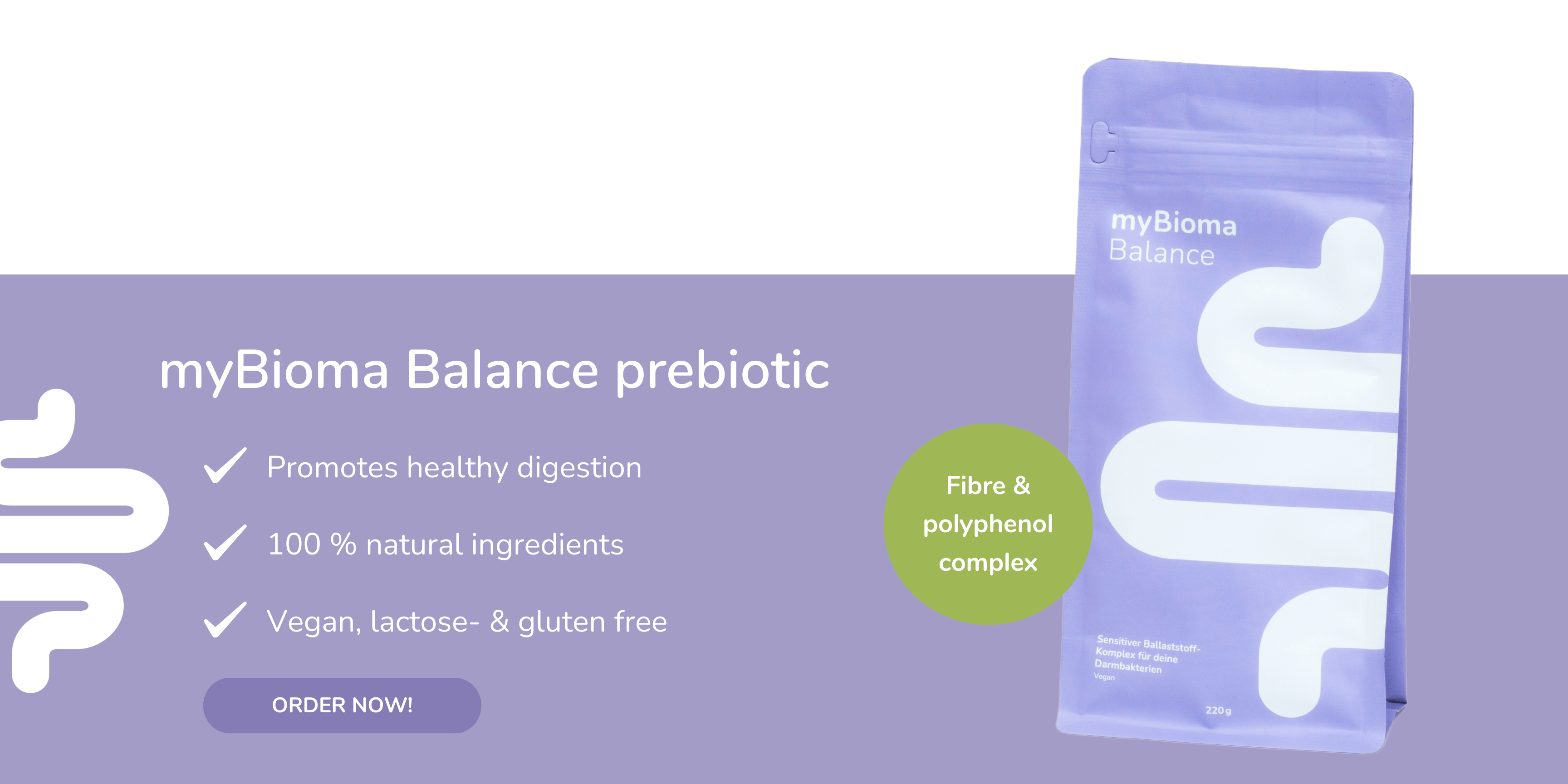
Tip: Especially for people with sensitive digestion, our prebiotic fibre complex myBioma Balance offers a simple yet effective way to support gut health.
Conclusion: Leaky Gut – Healing Begins in the Microbiome
The leaky gut syndrome is not a clearly defined medical condition and can manifest through a wide range of symptoms. However, it is a clear warning sign that your gut health is out of balance.
With the right diet, targeted microbiome care and a healthy lifestyle, you can strengthen your intestinal barrier – and give your body back its protective wall.
The myBioma microbiome-tests offer you valuable insights into your individual gut flora. This enables you to see whether your microbiome shows signs of a disrupted barrier – and to improve your gut health in a targeted way using personalised recommendations.
Because: A healthy gut doesn't just mean good digestion – it means well-being, energy, and balance from within. 💚
Note: If you’re dealing with leaky gut, you don’t have to face it alone! Seek professional support to find the best plan for you, without spending unnecessary time feeling lost. If you've taken a myBioma microbiome-test, you'll find a comprehensive network of selected partner therapists on our platform who can provide you with advice and support.
References
- Kinashi Y, Hase K. Partners in Leaky Gut Syndrome: Intestinal Dysbiosis and Autoimmunity. Front Immunol. April 22, 2021;12. Available at: https://www.frontiersin.org/journals/immunology/articles/10.3389/fimmu.2021.673708/full
- Martens EC, Neumann M, Desai MS. Interactions of commensal and pathogenic microorganisms with the intestinal mucosal barrier. Nat Rev Microbiol. August 2018;16(8):457–70.
- Aleman RS, Moncada M, Aryana KJ. Leaky Gut and the Ingredients That Help Treat It: A Review. Molecules. January 2023;28(2):619.
- Rohr MW, Narasimhulu CA, Rudeski-Rohr TA, Parthasarathy S. Negative Effects of a High-Fat Diet on Intestinal Permeability: A Review. Adv Nutr. January 1, 2020;11(1):77–91.